Black Spot
Diplocarpon rosae (Marssonina rosae) · Fungal
The most damaging rose disease in humid climates. Round black spots with feathery edges; leaves yellow and drop. Texas humidity makes it relentless.
Symptoms
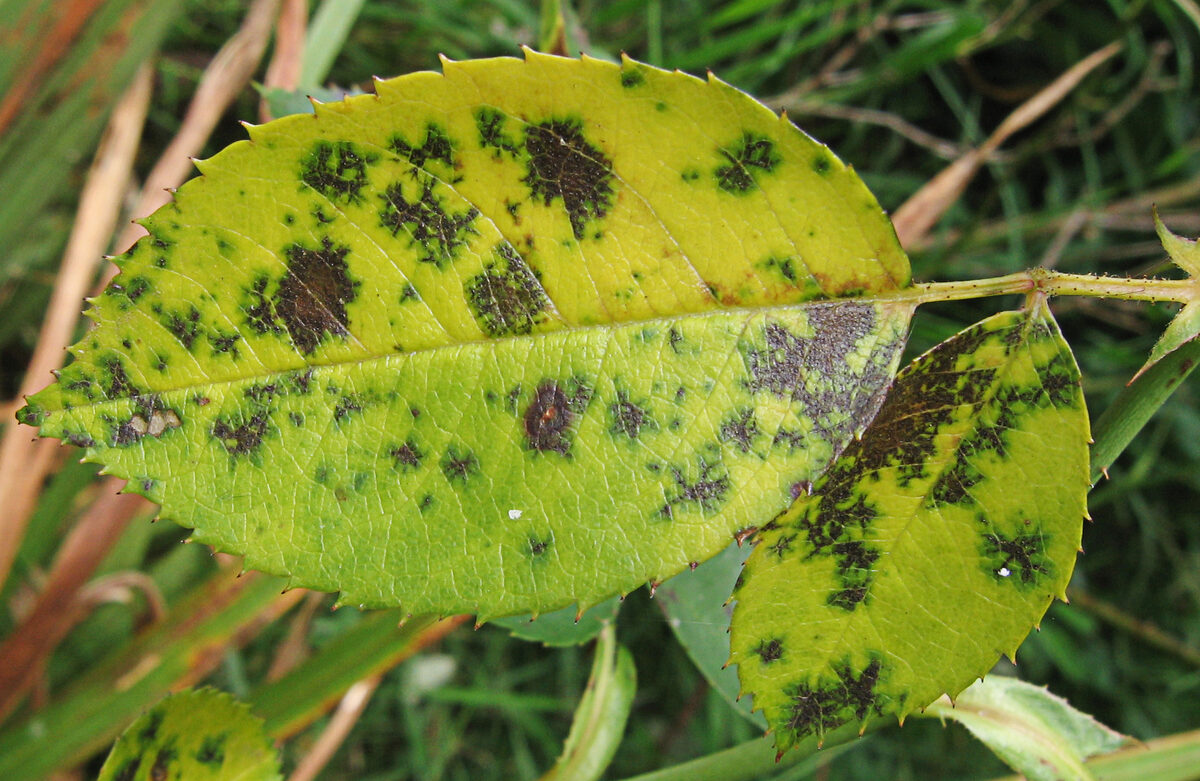
Black, roughly circular spots 3–13 mm across with characteristically fuzzy or feathery edges (this is diagnostic — it distinguishes black spot from cleaner-edged leaf spots). Yellowing fans out from each spot, and the entire leaf eventually goes yellow with the spots remaining black. Leaves drop from the bottom of the bush upward. Severe infection on canes appears as purple-black blotches that deepen into raised lesions.
How it progresses
Begins on lower leaves where humidity is highest and water lingers longest. Untreated, defoliation moves up the bush over 4–8 weeks. A single bush can lose 80–100% of its leaves in a wet summer. Defoliated plants try to push new growth, weakening reserves; severe seasons leave roses unable to harden off for winter.
Conditions that favor it
Spores germinate when leaves are wet for 7+ continuous hours at 65–80 °F. Splash dispersal — every rain spreads spores from old infected leaves. In Little Elm, May–June and September–October are peak. Spores overwinter on canes and fallen leaves.
Organic & cultural treatment
Sanitation is half the battle: rake and bag (DO NOT compost) every fallen leaf, weekly in season. Apply a 2–3 inch wood-chip mulch to suppress splash. Spray weekly with potassium bicarbonate (1 tbsp/gal + a few drops of dish soap), or with a Bordeaux/copper mixture (use the lowest effective rate; copper is hard on soil over years). Neem oil works as a preventive on small populations. Cornell formula (baking soda + horticultural oil + soap) gives modest control.
Chemical treatment (when warranted)
Chlorothalonil and mancozeb are protective contact fungicides — apply every 7–10 days during high pressure. Myclobutanil and tebuconazole are systemic; rotate them with contacts to delay resistance. Trifloxystrobin and fluopyram are excellent but pricier. Always rotate FRAC groups.
Prevention
Choose resistant varieties (Knock Out family, Drift series, Carefree Beauty, William Baffin, many Kordes' Resistensa types). Water at the base — never wet foliage; drip or soaker hose. Space plants for airflow (3 ft minimum between hybrid teas). Prune for an open vase shape every winter. Pick up every fallen leaf weekly. Remove infected leaves from the plant rather than waiting. Renew mulch yearly.