Botrytis Blight (Gray Mold)
Botrytis cinerea · Fungal
Buds that "ball" — fail to open and rot brown — and a fuzzy gray mold on dying flowers in cool wet weather.
Symptoms
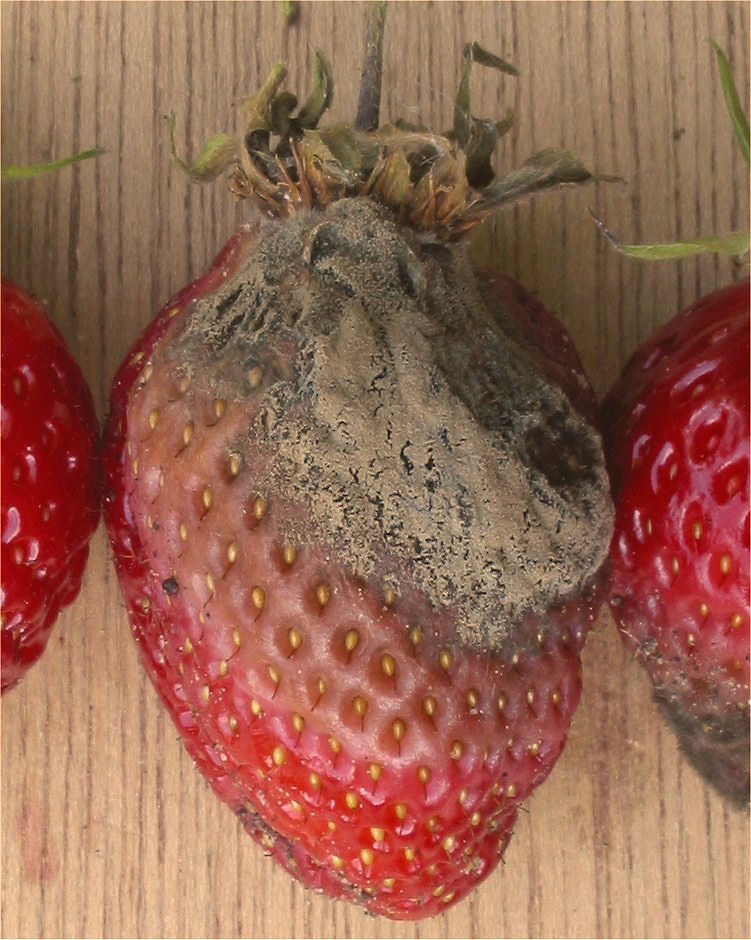
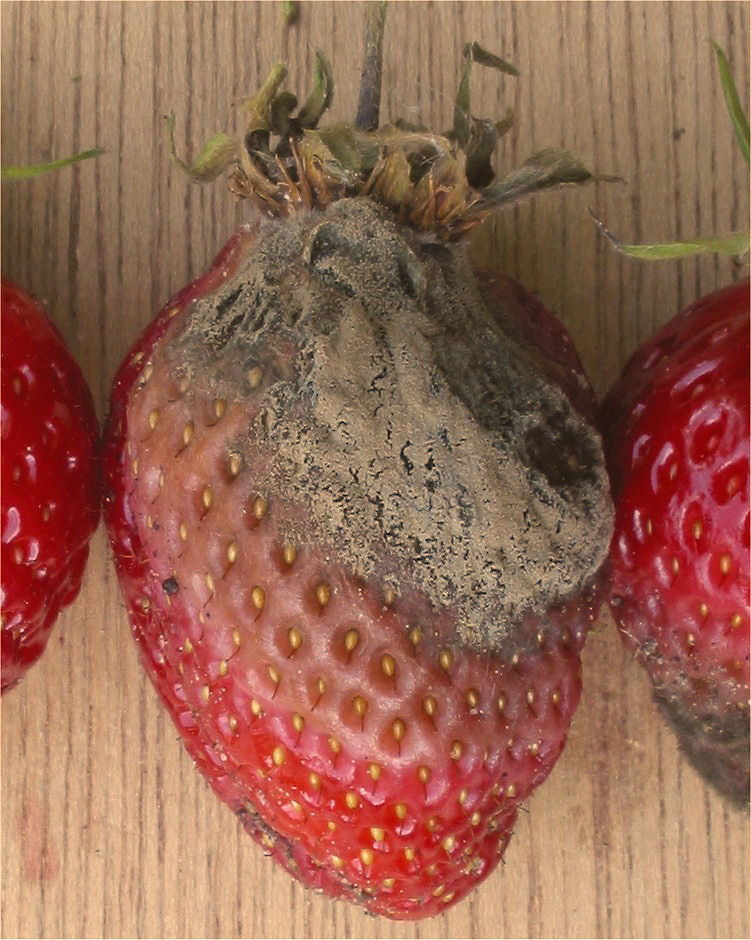
Brown spots and water-soaked patches on petals and sepals; flowers fail to open and the closed bud turns brown and mushy ("balling"). A characteristic fuzzy gray-tan mold develops on dying tissue and on petal edges. Cane tips can also blacken and drop. White flowers show pink-edged spotting; dark flowers show brown blotches.
How it progresses
A weak pathogen that exploits stressed and senescent tissue, but spreads from there into healthy tissue. Cool wet flushes after a hot dry spell are the worst. Whole flushes can be lost.
Conditions that favor it
Cool (55–70 °F) and damp; 6+ hours of leaf wetness. Spores are everywhere; they germinate on damaged petal tissue. Common in spring and fall in zone 8.
Organic & cultural treatment
Remove and destroy spent flowers and damaged tissue daily during a flush — the most important single action. Improve airflow. Avoid overhead watering. Cornell formula (baking soda + oil + soap) helps. Bacillus subtilis (Serenade) is moderately effective.
Chemical treatment (when warranted)
Iprodione, fenhexamid, and boscalid are effective. Rotate to slow resistance.
Prevention
Deadhead immediately and rigorously. Don't leave damaged petals on the plant. Improve drainage. Avoid handling flowers when wet.