Rose Rust
Phragmidium spp. · Fungal
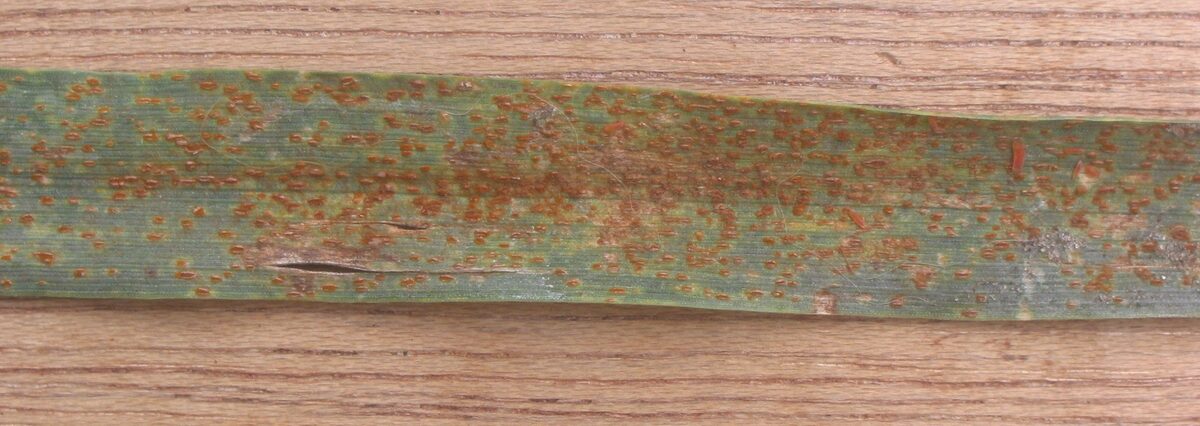
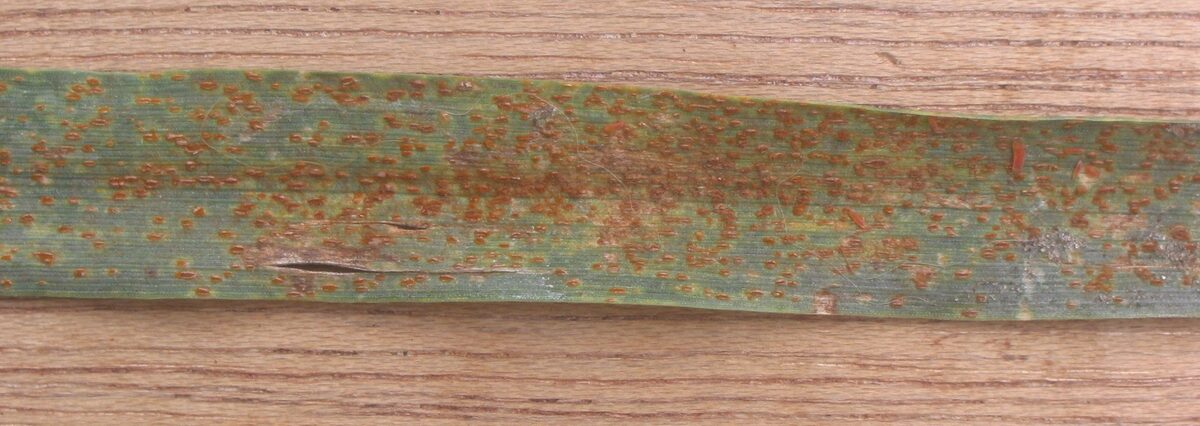
Bright orange pustules on the underside of leaves. More common in cool coastal climates than humid Texas, but still occasional.
Symptoms
Bright orange-yellow pustules (uredinia) on leaf undersides, sometimes also on canes and sepals. Yellow spots on the upper leaf surface above each pustule. Late in the season pustules turn black (telia) — the overwintering stage. Heavy infection causes leaf yellowing and drop.
How it progresses
Begins on lower leaves; spreads upward over weeks. In severe years can defoliate a bush. Less aggressive than black spot but more disfiguring while present.
Conditions that favor it
Cool, wet weather (50–70 °F) with leaf wetness for 2–4 hours. More common in coastal California than central Texas, but it does appear here in spring and fall.
Organic & cultural treatment
Remove and destroy infected leaves. Rake fall leaves thoroughly. Sulfur dust in cool weather. Neem oil as preventive.
Chemical treatment (when warranted)
Myclobutanil, tebuconazole, mancozeb. Same products that work on black spot generally suppress rust.
Prevention
Site roses for airflow and morning sun. Avoid overhead watering. Resistant cultivars (most modern shrubs, the Earth-Kind series).