Aphids
Macrosiphum rosae & Macrosiphum euphorbiae (rose aphid; potato aphid)
Soft-bodied, pear-shaped insects in clusters on new growth and buds. The single most common rose pest — usually the first to appear in spring.
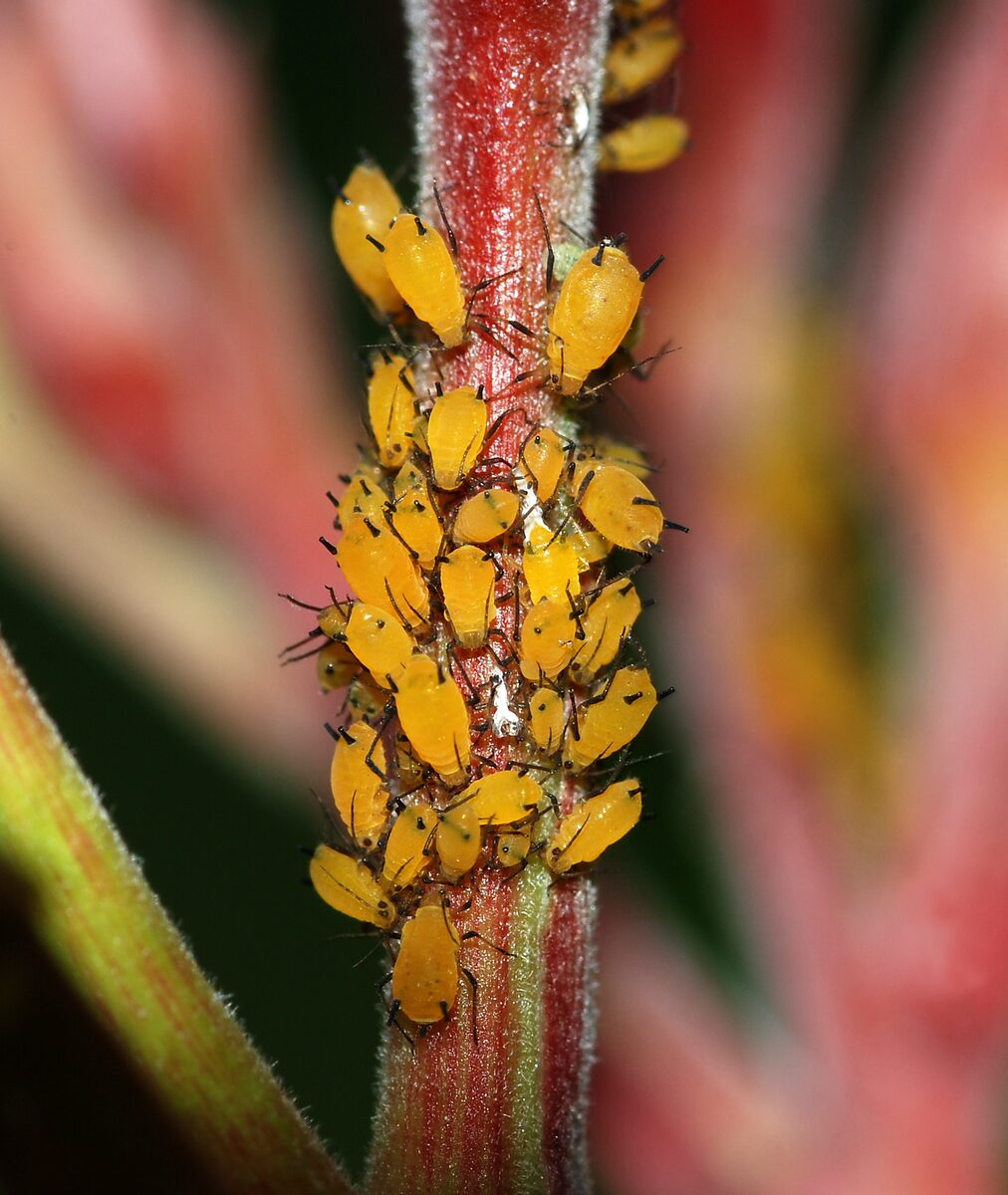
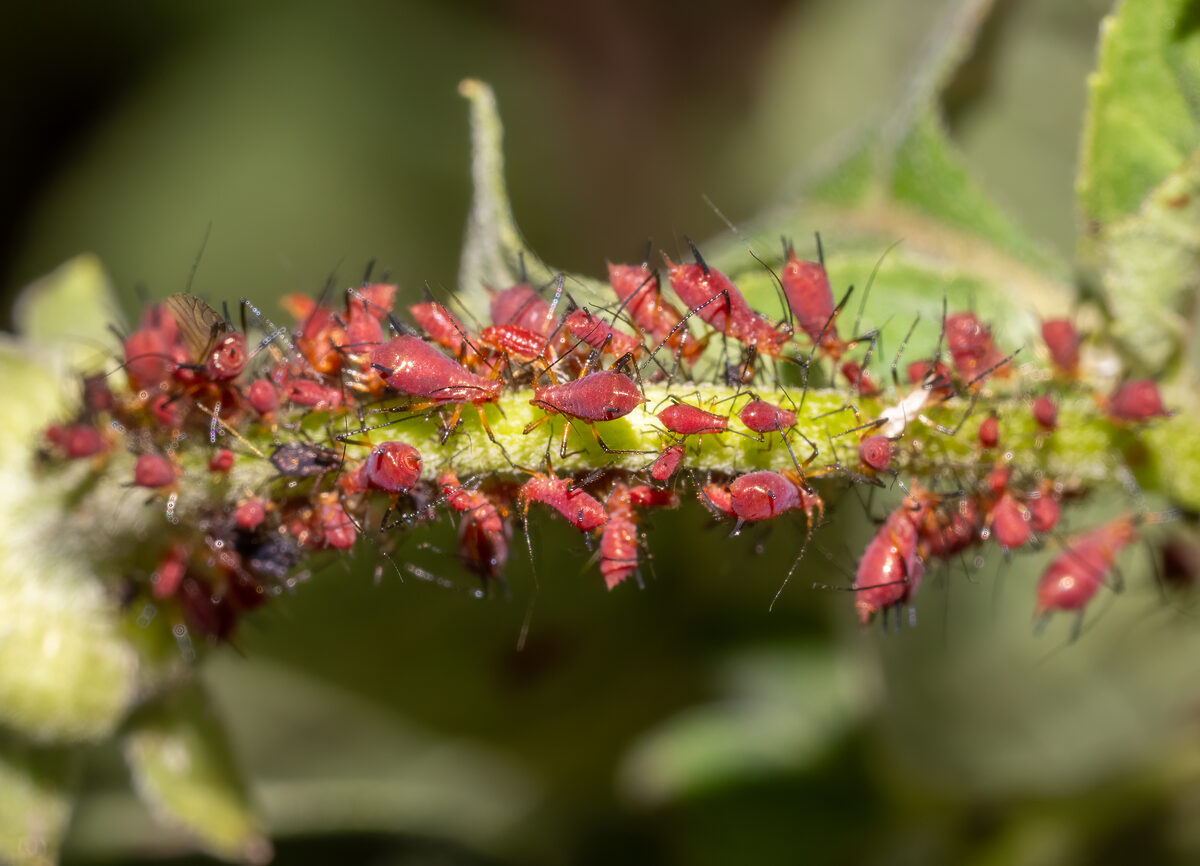
How to identify it
Pin-head to grain-of-rice sized insects, soft and pear-shaped, with two short tail-pipe "cornicles" near the rear. Colors run pale green, pink, red, yellow, or black depending on species and life stage. They cluster densely on the youngest tissue: tip growth, peduncles, sepals, and the undersides of unfurling leaves. Look for cast white skins (the shed exoskeletons), shiny leaves coated in honeydew, and a black sooty mold growing on top of the honeydew. Ants tending colonies for honeydew is a strong tell.
What the damage looks like
Direct feeding distorts new shoots — leaves cup, buds twist or fail to open, peduncles bend. Heavy populations stunt the plant for weeks. Honeydew supports sooty mold which blocks photosynthesis on older leaves. Aphids also vector several rose viruses; this is the bigger long-term cost.
Life cycle
Eggs overwinter on bark in cold climates; in zone 8a aphids can persist year-round on warm days. Reproduction is parthenogenetic during the growing season — females produce live young clones, no males required, with a generation every 7–10 days at 70–80 °F. A single founder can build a colony of hundreds in two weeks. Winged forms appear when colonies overcrowd, dispersing to new shoots.
Monitoring
Walk the garden weekly in spring with a hand lens; check the top inch of new growth on every cane. The first colony usually shows on the most vigorous shoot of the most vigorous plant.
Organic & cultural treatment
Strong jet of water in the early morning, three days running — knocks 80–90% off and they rarely climb back. Encourage lady beetles, lacewings, and parasitic wasps (small mummified aphids with a round exit hole are a sign Aphidius is at work). Insecticidal soap (1–2%) on cool, overcast mornings — coat the undersides. Neem oil (cold-pressed, 0.5–1%) at dusk. Pinch off heavily infested tips and bag them.
Chemical treatment (when warranted)
Systemic neonicotinoids (imidacloprid, dinotefuran) work but are toxic to bees feeding on the same plants — avoid on flowering roses. Pyrethrins offer a quick knockdown but flare mites. Spirotetramat (Movento) is a translaminar option that spares pollinators.
Prevention
Avoid over-feeding nitrogen — soft, lush growth is aphid candy. Tolerate light populations to feed beneficial insects; lady beetles need prey to stay. Plant a small patch of dill, fennel, or yarrow nearby to host parasitoids. Inspect new plants before bringing them home.