Tobacco Budworm
Chloridea virescens
Caterpillars that bore directly into rose buds and feed inside. You don't see them — you find chewed buds with frass at the base.
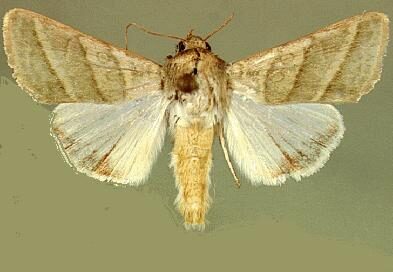
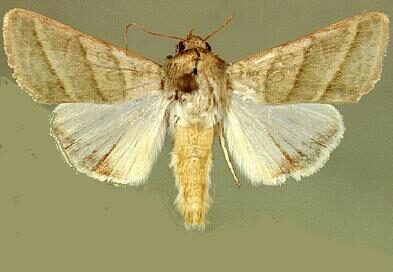
How to identify it
Caterpillars are 30–35 mm at maturity, variable in color (green, pink, brown, or red-streaked) with prominent pale stripes along the body and tiny dark bumps. They feed mostly at night and hide deep inside buds during the day. Adult moths are mottled gray-green, 30–40 mm wingspan, active at dusk.
What the damage looks like
Caterpillars eat into the bud, tunneling through developing petals. Affected buds open with chunks missing, or rot from the inside. Frass — small dark pellets — accumulates around the bud or in the cup of an opening flower. Large larvae will move bud to bud through a flush.
Life cycle
Multivoltine in zone 8, with 3–4 generations from May to October. Eggs are laid singly on buds and shoot tips. Larvae feed for 3–4 weeks then pupate in the soil; adults emerge in 10–14 days.
Monitoring
Inspect buds every few days during the warm season. Frass at the bud base is a giveaway.
Organic & cultural treatment
Hand-pick from open buds at dusk with a flashlight — the most reliable control. Bt (Bacillus thuringiensis var. kurstaki) is effective on small larvae but does not reach those already inside the bud. Spinosad reaches better. Encourage parasitic wasps (Trichogramma) and tachinid flies.
Chemical treatment (when warranted)
Spinosad is the go-to. Pyrethroids work on adults but flare mites.
Prevention
Disbud damaged shoots back to clean wood. Avoid lights right next to the rose garden — moths follow them in.