Japanese Beetle
Popillia japonica
Half-inch metallic-green-and-copper beetles that arrive in June–July, feed in groups, and skeletonize leaves and petals.
How to identify it
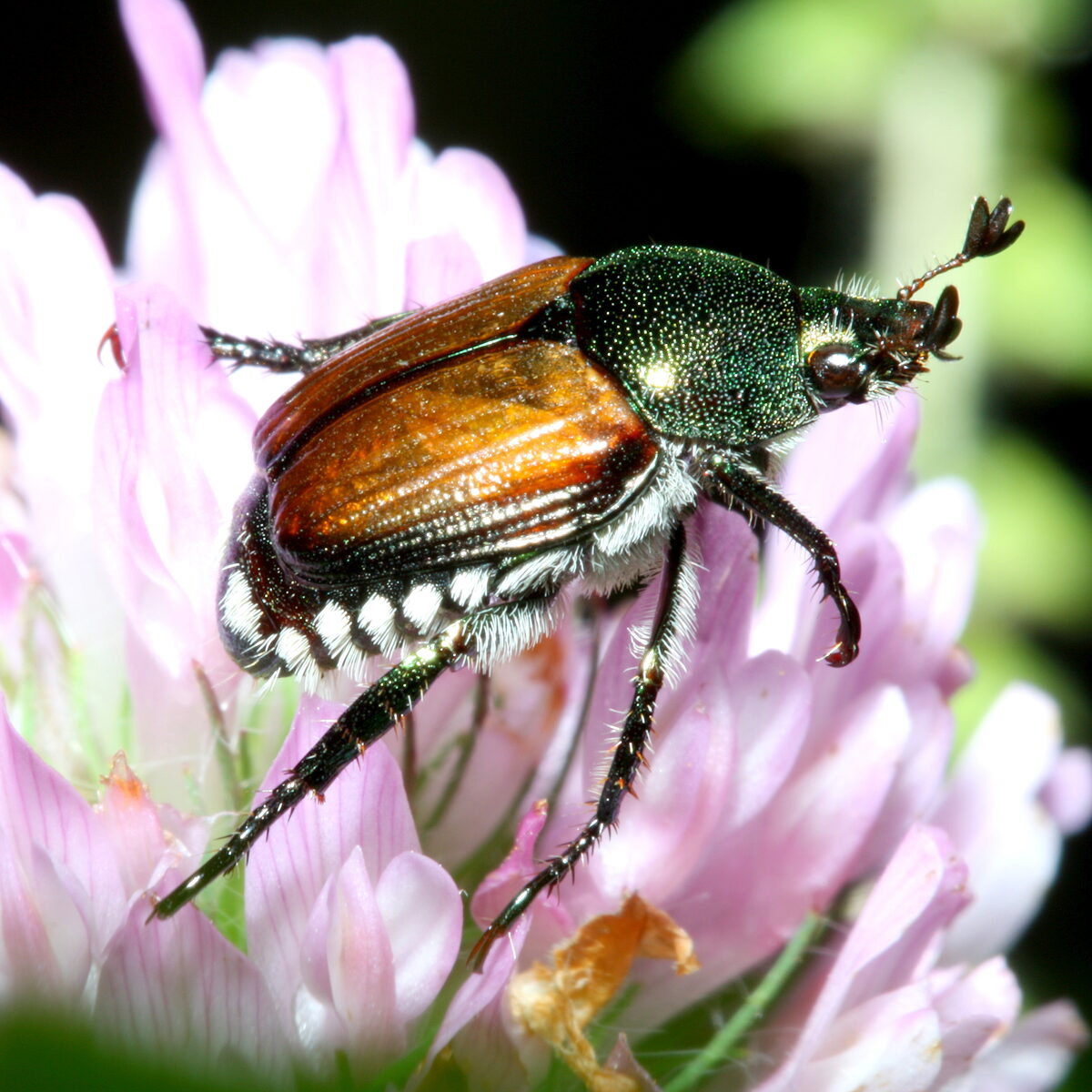
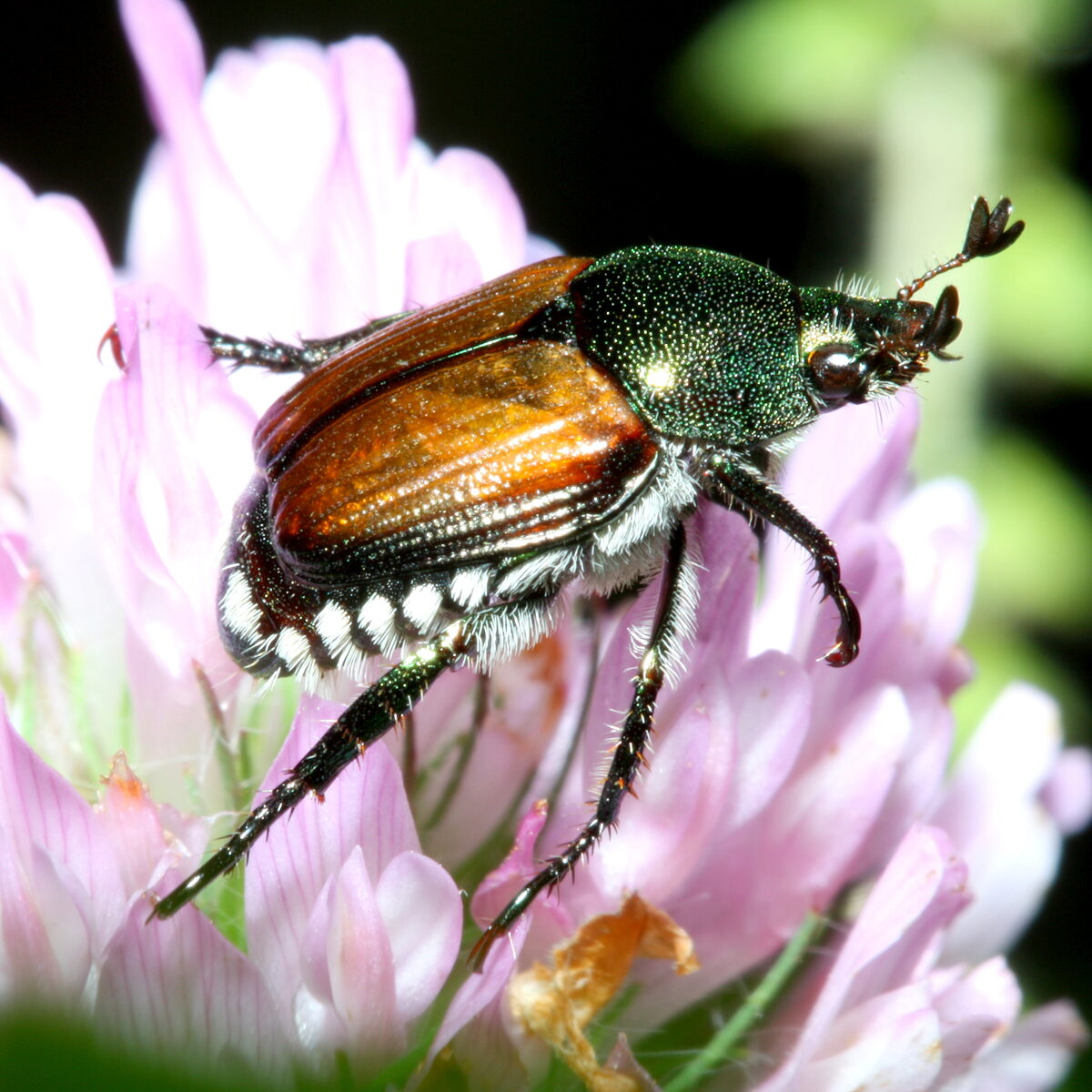
Adult beetles are unmistakable: 12–14 mm long, iridescent metallic green head and thorax, copper-bronze wing covers, with five small white tufts of hair along each side and two on the rear. They feed in groups, often a dozen or more on a single bloom. The grub is a typical white C-shaped scarab grub in soil, 20–25 mm at maturity, with a brown head and a V-shaped row of bristles on the rear underside (the raster pattern — diagnostic for the species).
What the damage looks like
Adults skeletonize leaves between veins, leaving a lacy brown "fishnet". They prefer pale and fragrant blooms — petals are chewed into ragged crescents and the whole bud may be hollowed out. Damage on roses is concentrated on the upper canopy in full sun. Grubs feed on grass roots and contribute to lawn brown patches but rarely damage rose roots directly.
Life cycle
Univoltine: one generation a year. Adults emerge from soil in late June (north Texas), feed and mate for 4–6 weeks, females laying 40–60 eggs in lawn soil 2–4 inches deep. Eggs hatch in 2 weeks; grubs feed on roots through fall, overwinter deep, return to feed briefly in spring before pupating. Adults are gone by late August.
Monitoring
Walk the garden mornings during the flight; beetles are sluggish below 70 °F. Pheromone traps catch huge numbers but draw MORE beetles from the neighborhood — never use traps within 100 ft of roses.
Organic & cultural treatment
Hand-pick into a jar of soapy water at 7–8 AM when they are slow. Two passes a day during peak flight reduces population dramatically. Neem oil (azadirachtin) deters feeding for 3–5 days. Beauveria bassiana works on grubs in soil. Milky spore (Paenibacillus popilliae) for grub control in lawn — slow but durable.
Chemical treatment (when warranted)
Carbaryl gives quick control on adults but is hard on bees and beneficials and flares mites. Pyrethroids (bifenthrin, lambda-cyhalothrin) work for 5–10 days. Use sparingly and never on open blooms.
Prevention
Keep lawn dry in midsummer — females avoid laying in dry soil. Plant garlic chives, catnip, or larkspur near roses (mild repellents). Cover prized cultivars with fine bridal-veil mesh during the 6-week peak. Encourage tachinid flies and Tiphia wasps.