Citrus Mealybug
Planococcus citri
Cottony white tufts in leaf axils and on canes. More problematic on potted/greenhouse roses than outdoor.
How to identify it
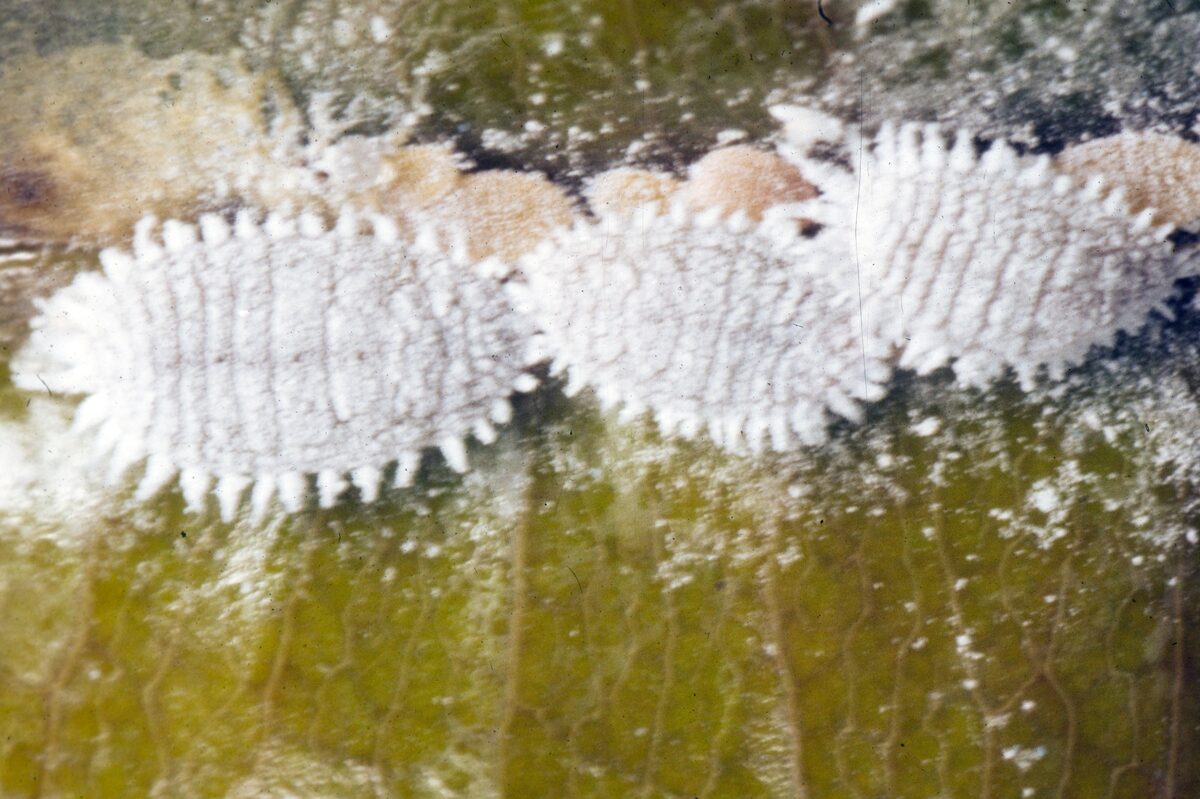
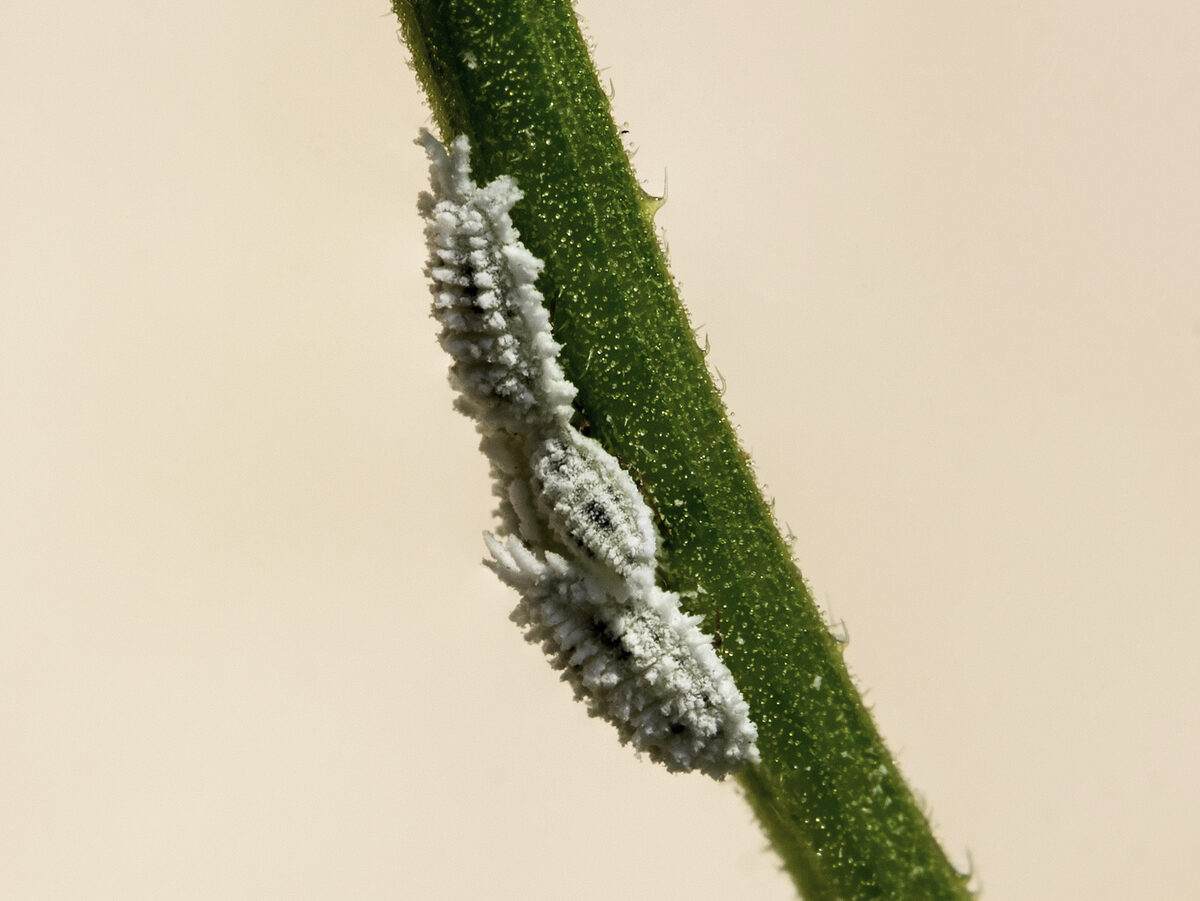
White, cottony, soft-bodied insects 3–5 mm long, covered in waxy filaments that look like fluffy snow tufts. They cluster in protected spots: leaf axils, cane junctions, the inside of tight new buds. Crush one and it leaves a wet pink smear.
What the damage looks like
Sap feeding causes leaf yellowing, distorted growth, and bud drop. Honeydew fuels sooty mold. Heavy populations are unsightly more than fatal.
Life cycle
Females lay 300–600 eggs in cottony egg sacs. Egg-to-adult is ~30 days at 75 °F. Several overlapping generations a year.
Monitoring
Spot-check leaf axils and buds, especially on indoor and patio roses.
Organic & cultural treatment
Dab with rubbing alcohol on a cotton swab — kills on contact. Insecticidal soap. Encourage Cryptolaemus ladybeetles (the "mealybug destroyer") in greenhouses.
Chemical treatment (when warranted)
Spirotetramat for systemic control. Pyriproxyfen on crawlers.
Prevention
Inspect new plants thoroughly before introducing. Avoid high nitrogen.