Rose Curculio
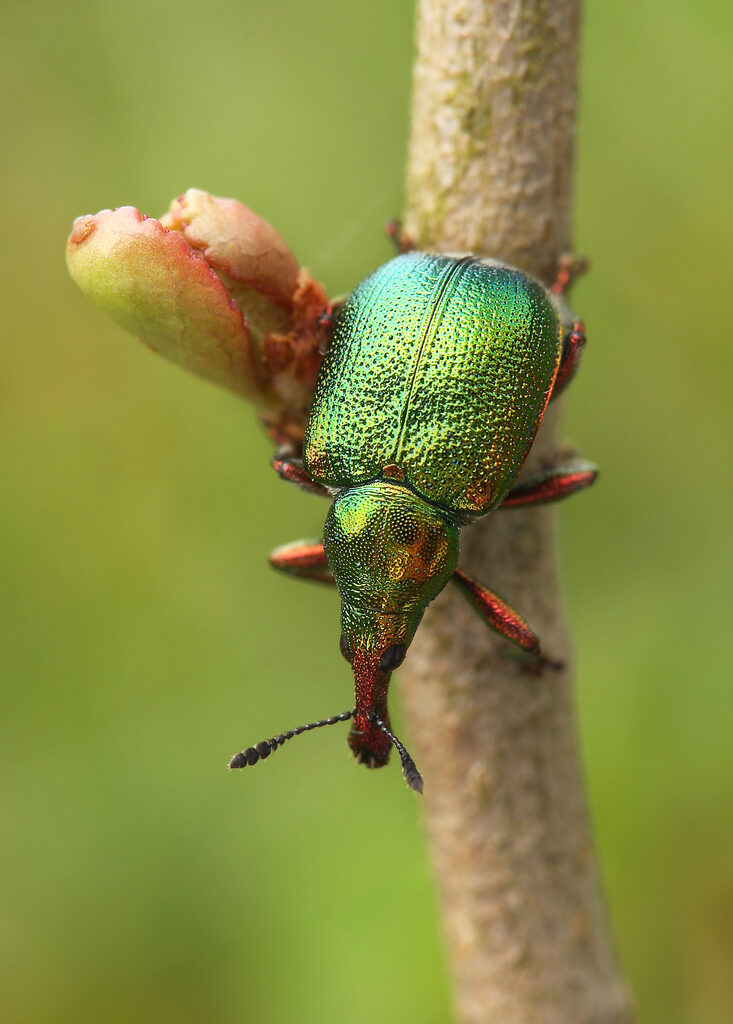
Merhynchites bicolor
A bright red-and-black snout weevil that drills holes through buds and chews shoot tips. Distinctive in person, easily missed by symptom.
How to identify it
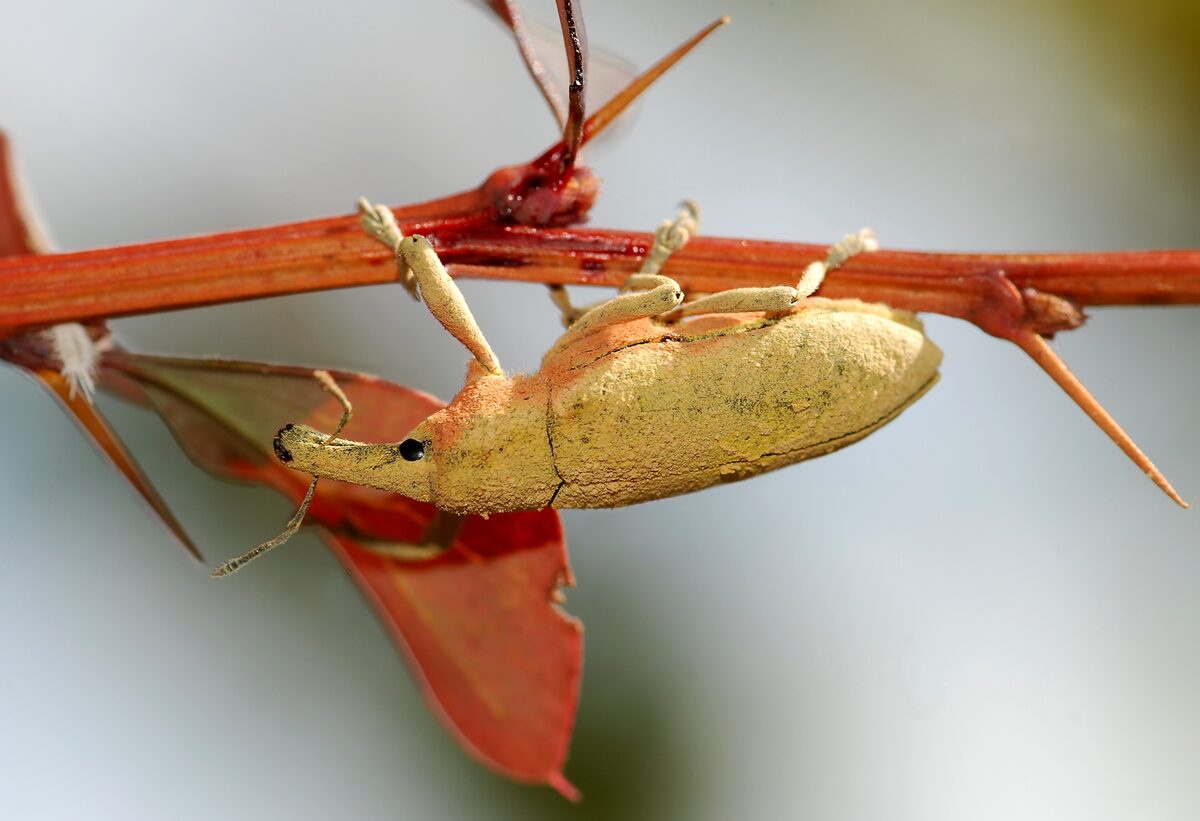
Adults are unmistakable up close: 6–8 mm, brilliant scarlet body with a black head and a long curved snout. Larvae are small white grubs found inside damaged buds. The diagnostic damage is small round holes drilled through buds — the bud may open with a notch missing, or fail to open and rot. Damage is concentrated on yellow and white roses, which they prefer.
What the damage looks like
Drilled buds fail to open or open malformed. Heavy populations can sterilize a bush. Mostly cosmetic on a backyard scale unless populations are large.
Life cycle
One generation a year. Adults emerge in May and feed and lay through June. Females drill into buds to lay eggs; larvae feed inside, drop to the soil to pupate, emerging the following spring.
Monitoring
Inspect yellow roses daily during May. Look for the holes and the beetle itself.
Organic & cultural treatment
Hand-pick into soapy water — they "play dead" and drop when disturbed, so hold a jar underneath. Remove and destroy damaged buds before larvae mature. Cultivate the soil under bushes in late summer to expose pupae.
Chemical treatment (when warranted)
Pyrethroids during peak adult activity.
Prevention
Cultivate soil around the drip line in fall to expose pupae to predators and cold. Plant fewer pure-yellow cultivars in midsummer flush windows if curculios are persistent.