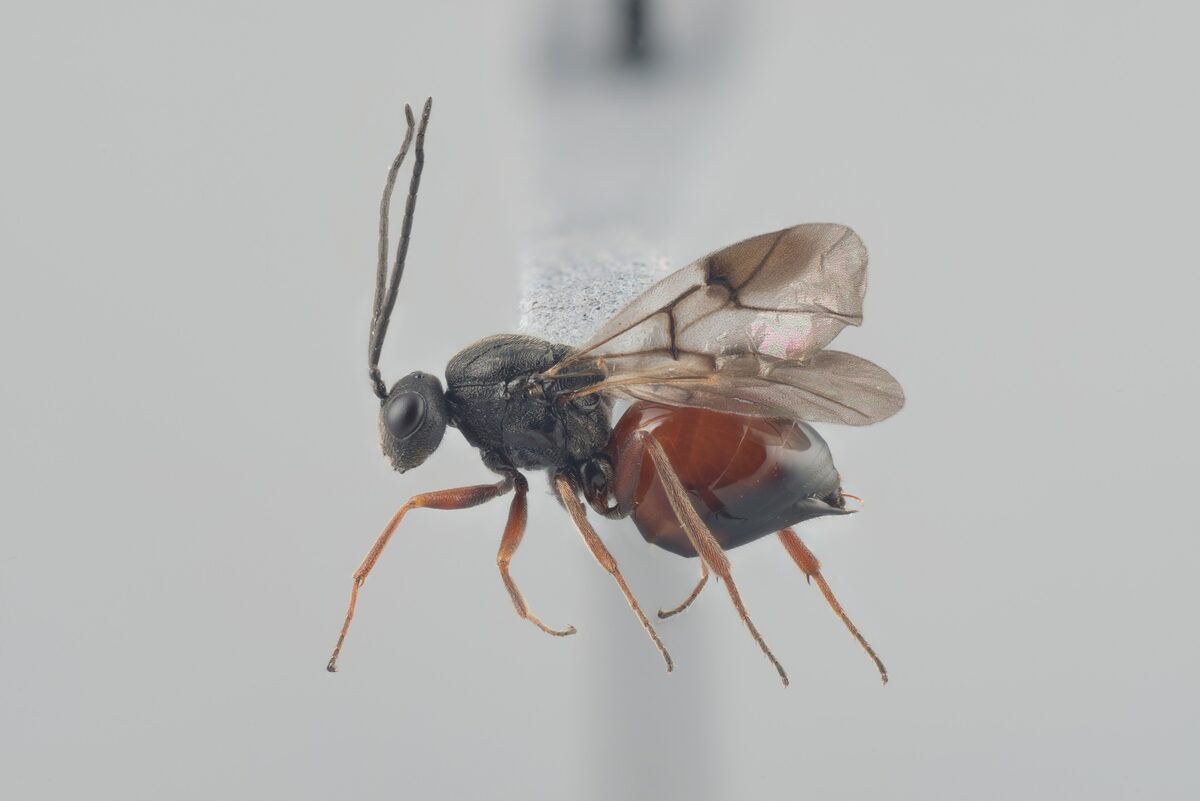
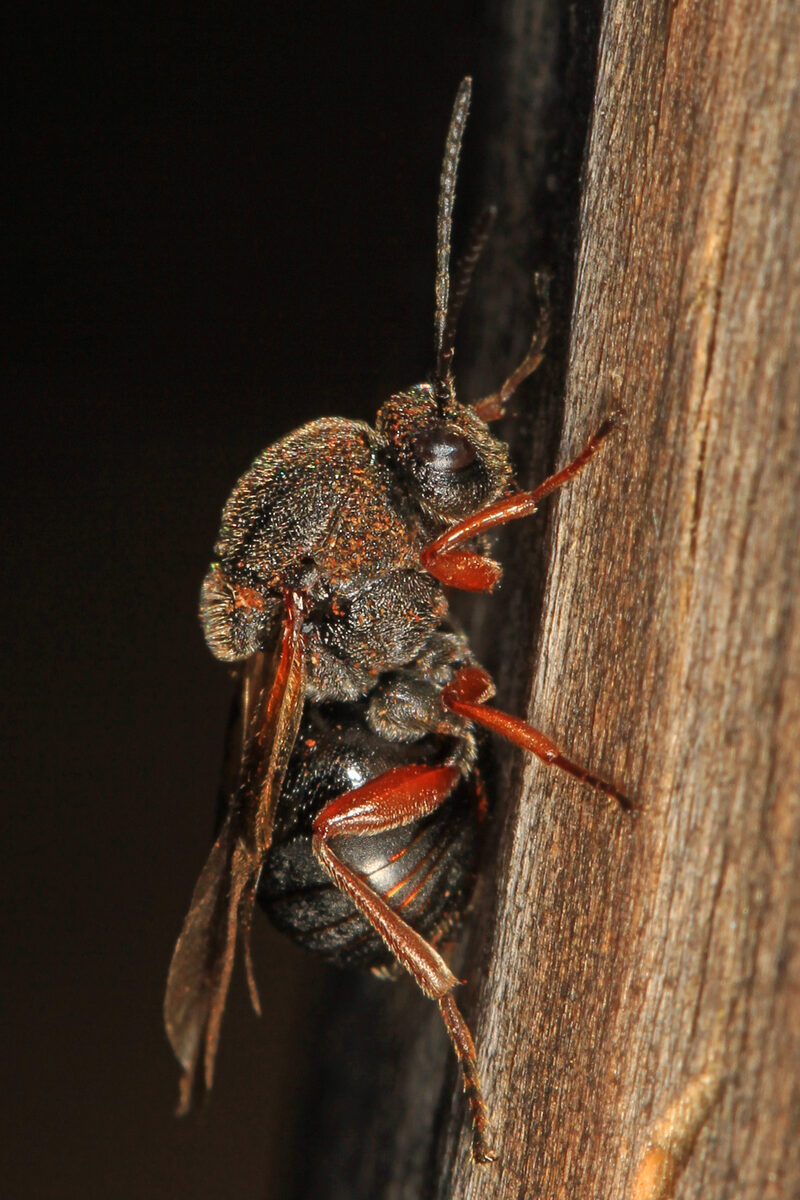
Mossy Rose Gall Wasp
Diplolepis rosae & Diplolepis polita
Striking, mossy-pink "Robin's pincushion" growths on canes. More curiosity than threat.
How to identify it
A globular, fibrous, mossy-pink to red gall, 2–4 cm across, attached to a cane like a tiny wig. Inside are dozens of small chambers each containing a wasp larva. The leaf gall (Diplolepis polita) makes smaller, smooth, spiky red galls on leaflets.
What the damage looks like
Galls are mostly cosmetic. Heavy infestations may slightly reduce a cane's vigor. They look striking enough that some growers keep them.
Life cycle
Univoltine. Adults emerge from galls in spring, females lay eggs in young canes; larvae develop inside the gall through summer, overwinter, and emerge the next spring. Reproduction is largely parthenogenetic — the male is rarely seen.
Monitoring
Notice the galls in late summer; they are most visible after leaf-drop.
Organic & cultural treatment
Prune off galls and destroy before adults emerge in early spring (March in zone 8). That ends the local population.
Chemical treatment (when warranted)
Not warranted.
Prevention
Prune and remove galls every late winter. Tolerate small numbers — the wasps are harmless to humans and add character.