Rose Slug (Sawfly Larvae)
Endelomyia aethiops; Cladius difformis; Allantus cinctus
Tiny, slug-like larvae that skeletonize rose leaves in spring. Despite the name they are larvae of small, non-stinging wasps.
How to identify it
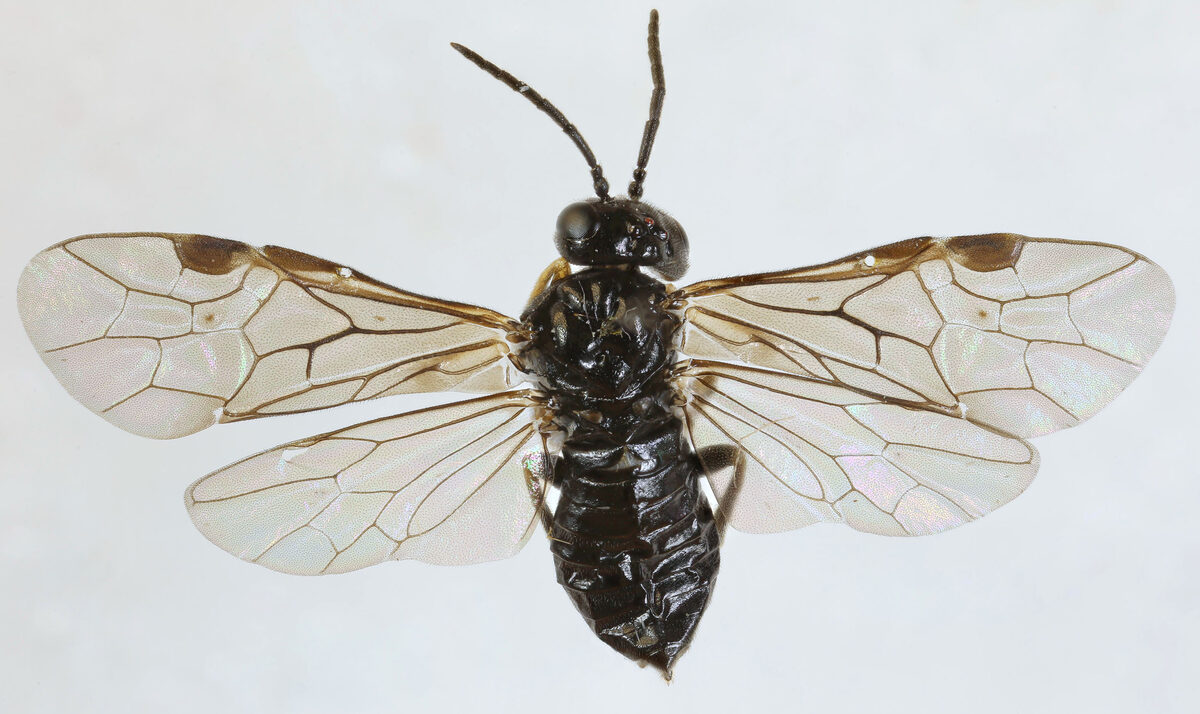
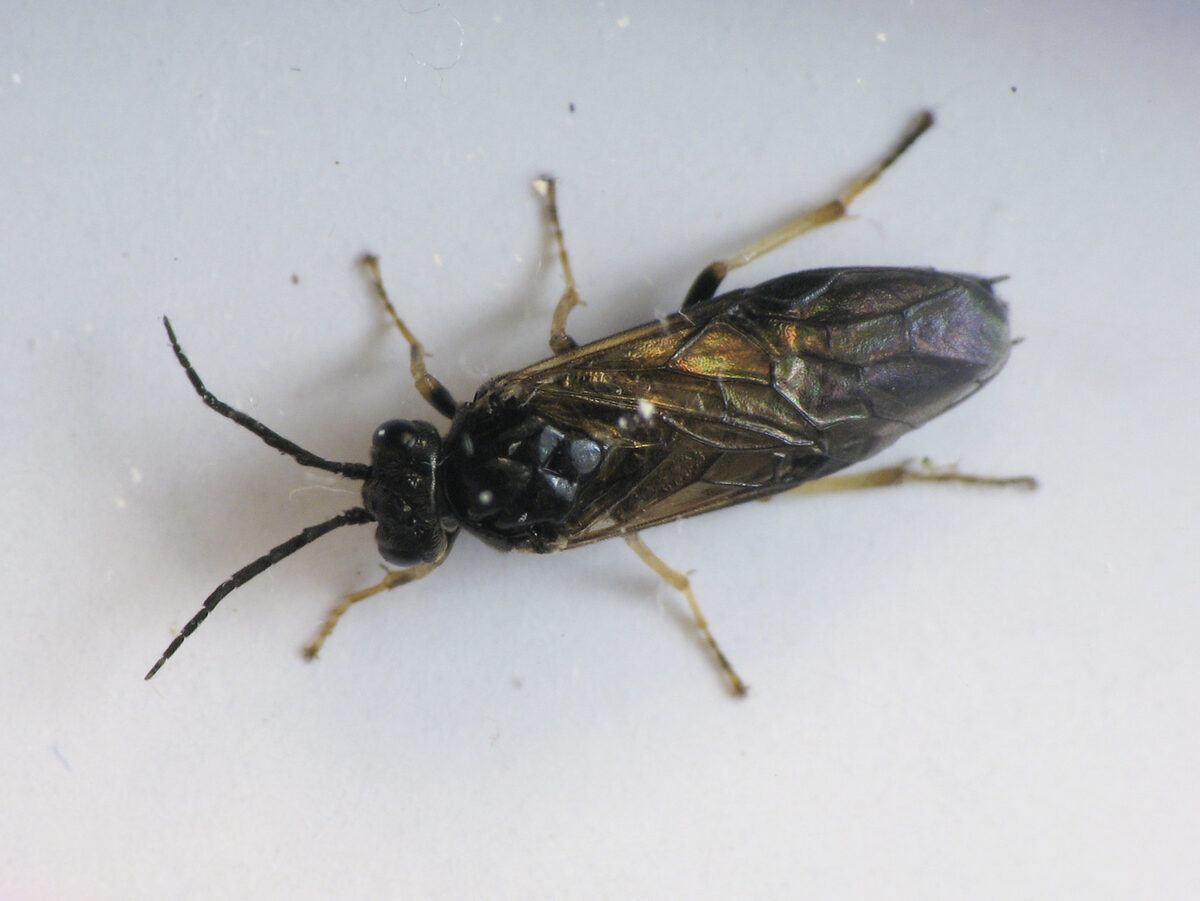
Three species are common in North America: the European (Endelomyia) is yellow-green with a slightly translucent slimy look, 12–15 mm; the bristly rose slug (Cladius) has fine bristles and is more whitish; the curled rose sawfly (Allantus) curls into a tight spiral when disturbed. All feed on the underside of leaves. Adults are 5–8 mm dark wasps you will rarely see. Look for "windowpane" feeding patterns — the larva eats the leaf surface but leaves the opposite side intact, creating translucent patches that brown within a day.
What the damage looks like
Skeletonized leaves with a translucent, then brown, lacy pattern. Heavy populations defoliate from the inside out, weakening the plant for the rest of the season. Damage is mostly cosmetic if caught early; severe and repeated defoliation impacts root reserves.
Life cycle
European rose slug is univoltine — one generation in spring, adults emerging from soil pupae in April–May, females sawing eggs into leaf veins. Larvae feed for 3–4 weeks then drop to soil to pupate through summer, fall, and winter. Bristly rose slug has 2–6 generations a year; curled rose sawfly has 2.
Monitoring
Inspect leaf undersides in April and after every flush. The translucent windowpane pattern is your alert.
Organic & cultural treatment
Hand-pick or wash off with a hard water spray — they do not climb back well. Insecticidal soap at full coverage on undersides. Spinosad is effective. Bt (Bacillus thuringiensis) does NOT work — sawflies are wasps, not caterpillars.
Chemical treatment (when warranted)
Carbaryl, acephate, and pyrethroids work but flare other pests. Spinosad is usually enough.
Prevention
Cultivate the soil shallowly under bushes in winter to disturb pupating larvae. Encourage parasitic wasps; tolerate the first generation as a host for them.