Rose Scale
Aulacaspis rosae & Diaspidiotus perniciosus
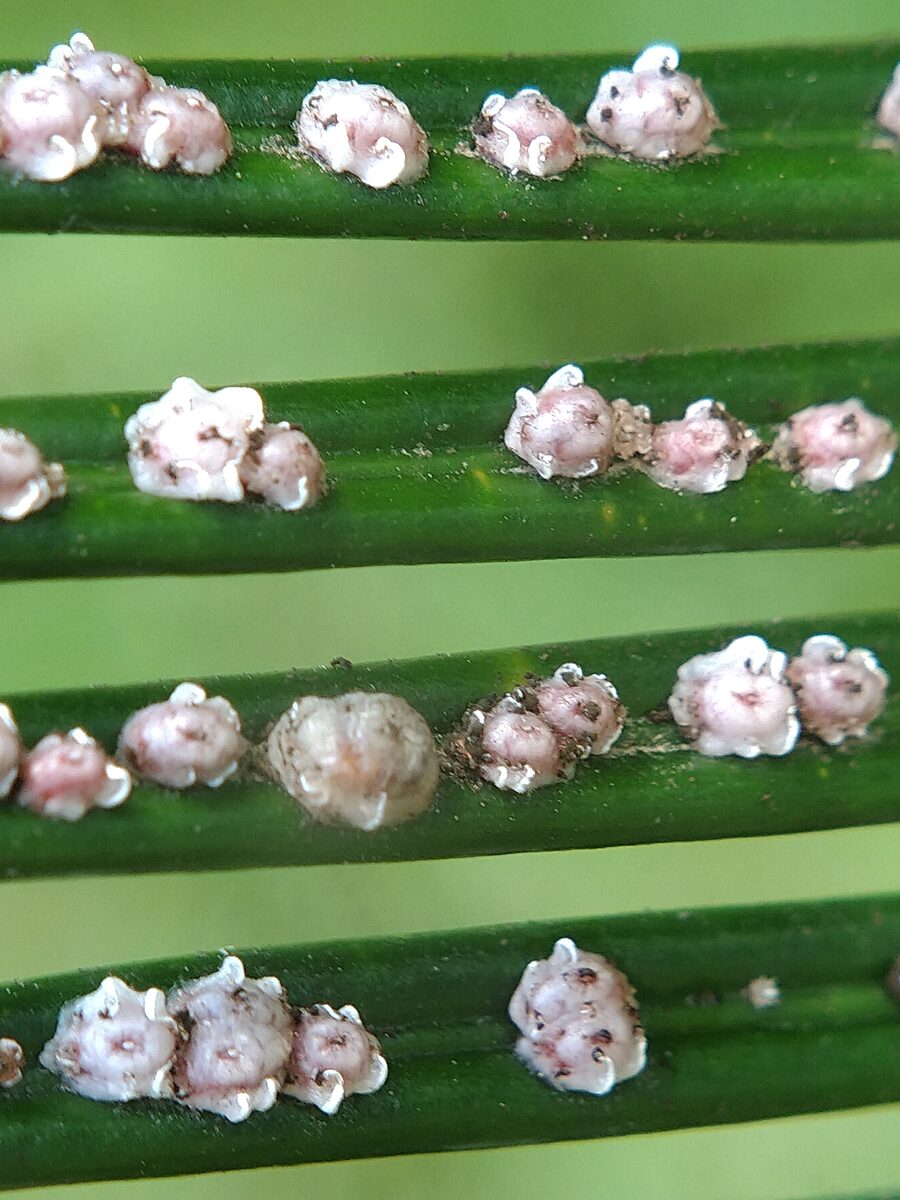
Small immobile insects that look like crusty white or brown bumps welded onto canes and the undersides of leaves.
How to identify it
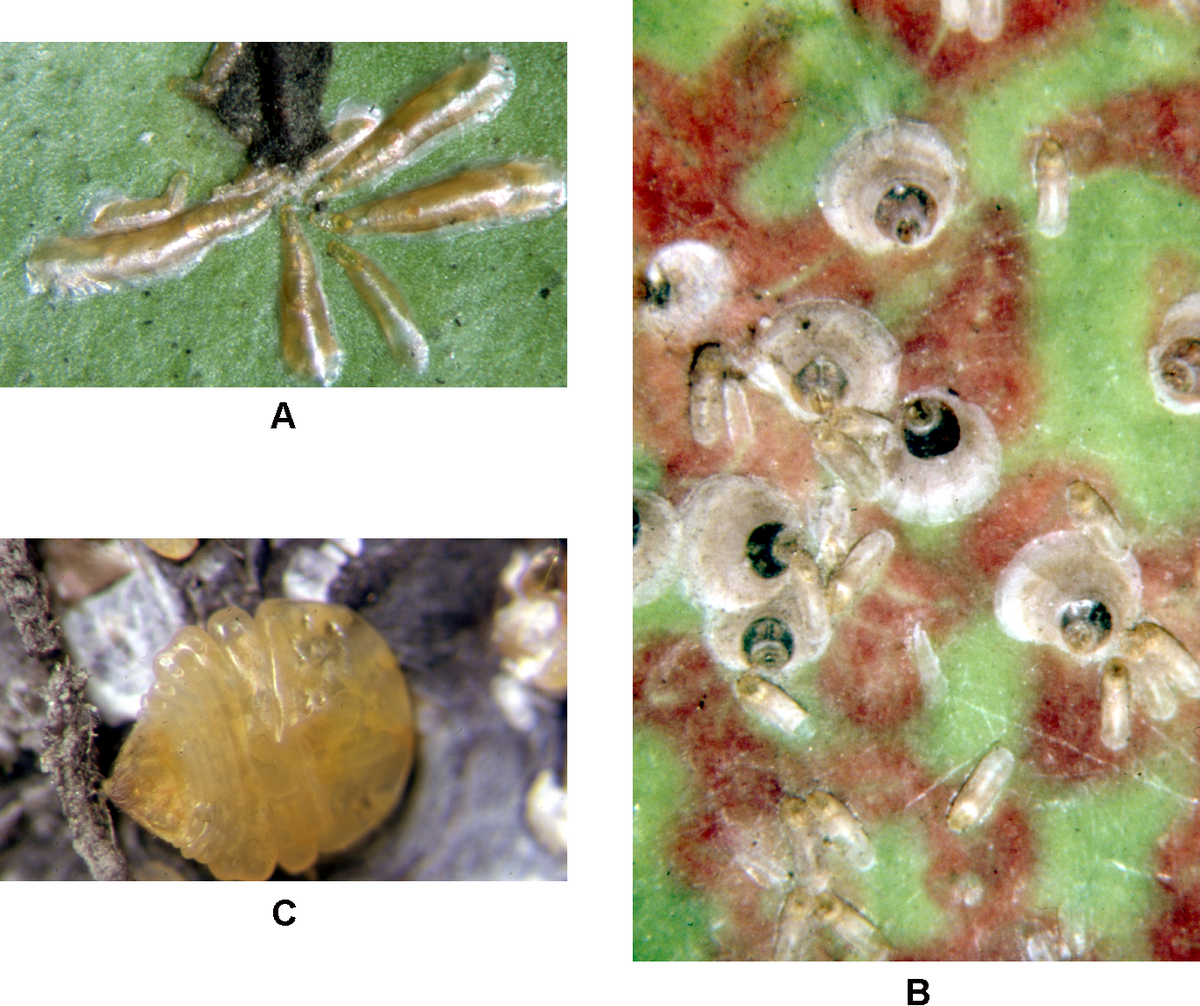
Mature rose scale females form a 2–3 mm round, white-to-pale-gray waxy cover on canes; males are smaller, narrow, and white. San Jose scale is darker, gray-brown, with a tiny nipple in the center of each scale cover. Pry one off with a fingernail — the soft yellow insect underneath confirms it is alive. Look on older wood, the lower foot of canes, and the undersides of basal leaves. Yellow flecks on the upper leaf surface above an infested cane are an early sign.
What the damage looks like
Scale insects suck sap, weakening canes and causing dieback when populations are heavy. White cottony patches on canes look bad and reduce vigor. Rarely fatal but a chronic drag on plant health, especially on older bushes and on hedges of polyantha and rugosa types.
Life cycle
Eggs are laid under the female cover. Crawlers (the only mobile stage) emerge over a 1–2 week window in late spring and early fall, walk to a feeding site, settle, and secrete the wax cover. Once settled they never move again. In zone 8a expect crawler emergence in early May and again in late August.
Monitoring
Wrap a piece of double-sided sticky tape around an infested cane in late April; check daily for the orange dots that are the crawlers. That tells you precisely when to spray.
Organic & cultural treatment
Horticultural oil applied to dormant canes in late winter smothers females. Foliar oil during crawler emergence is highly effective. Scrub a soft toothbrush dipped in soapy water along infested canes. Encourage parasitic wasps (Aphytis, Encarsia) and predatory beetles.
Chemical treatment (when warranted)
Pyriproxyfen (insect growth regulator) and buprofezin target crawlers. Systemic neonicotinoid drench reaches scales but use only on non-flowering plants.
Prevention
Prune out heavily infested canes in winter. Avoid stressed plants — drought-stressed roses are more susceptible. Quarantine new plants for 2 weeks and inspect.