Two-Spotted Spider Mite
Tetranychus urticae
Microscopic mites that explode in hot, dry weather. The first sign is a faint stippling on leaves; by the time you see webbing it is already serious.
How to identify it
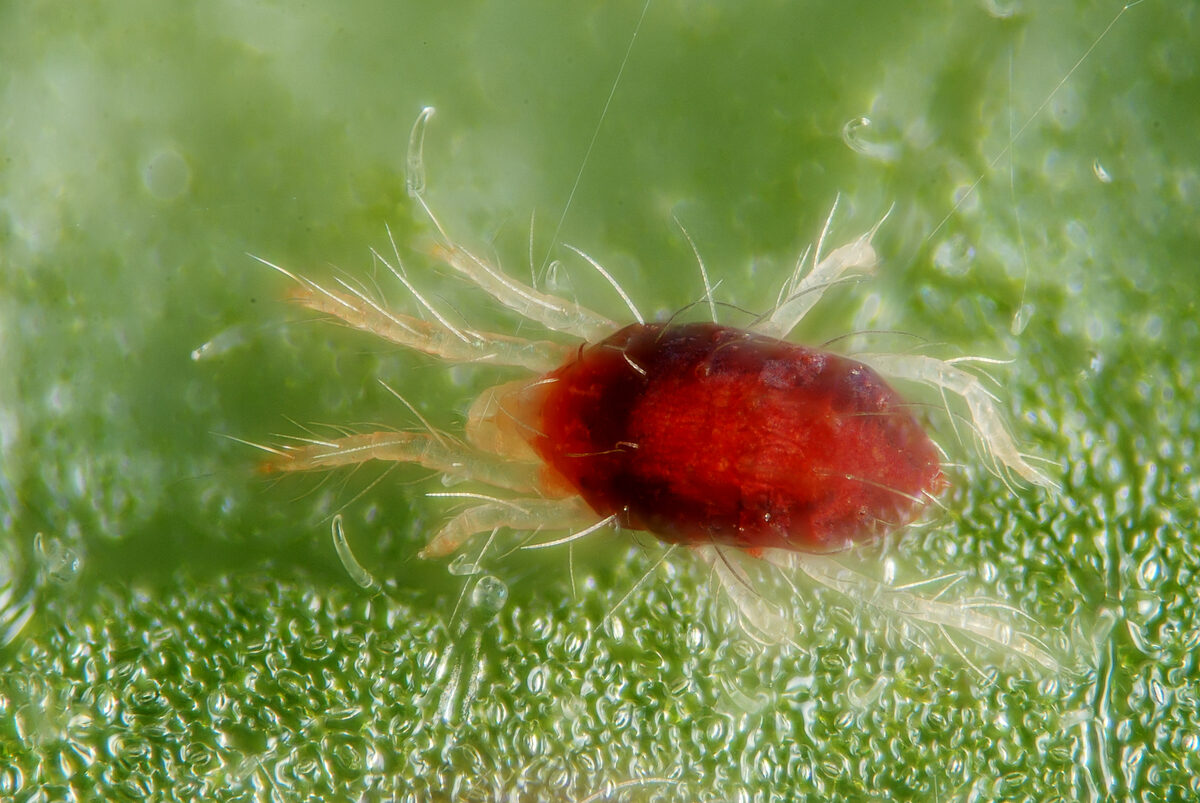
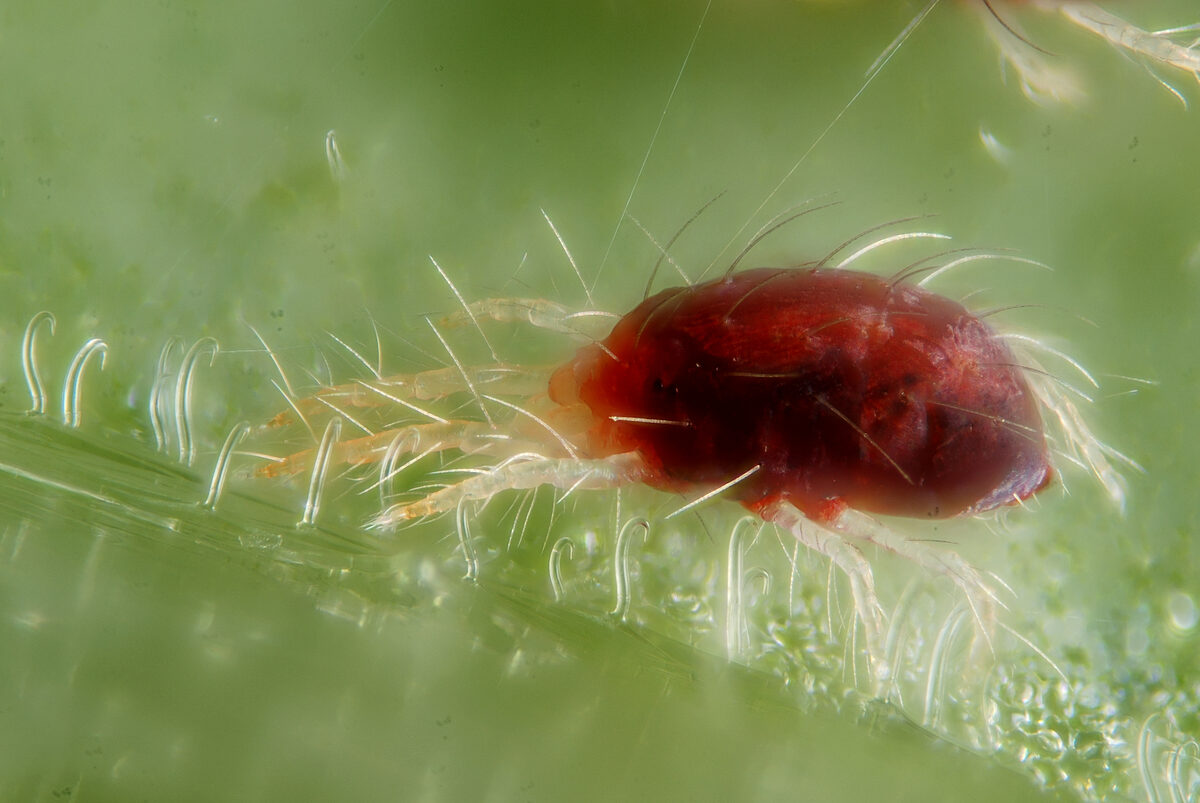
Adult mites are 0.4–0.5 mm — barely visible. Hold a white sheet of paper under a leaf and tap: the moving specks are mites. Under a 10× hand lens you can see the two dark patches on the abdomen that give the species its name. Eggs are tiny, round, and pearl-colored. Fine silken webbing across the underside of leaves and between leaflets confirms the diagnosis. Rusty bronzing of the leaf surface is classic mid-stage damage.
What the damage looks like
Mites pierce leaf cells and suck the contents, leaving pinprick yellow stipples that coalesce into bronze blotches. Severely infested leaves turn dusty gray-bronze, dry up, and drop — often the entire lower half of the plant. Heavy infestations look like a spider has covered the bush in fine cobweb. Roses recover slowly because mites favor the older, more efficient leaves.
Life cycle
Egg → larva → two nymph stages → adult, with a complete generation in as little as 5–7 days at 90 °F. Females lay 100+ eggs over their 2–4 week life. Populations double every 3–4 days in hot, dry weather. They overwinter as bright orange-red adult females in bark crevices, leaf litter, and soil cracks; numbers crash with sustained cool, wet weather.
Monitoring
Tap-test weekly in summer. Watch for early bronzing — once webbing is visible you have already lost the leaves the mites are on.
Organic & cultural treatment
Hard water sprays from below, three days running — physically dislodges mites and raises humidity. Insecticidal soap (1–2%) at dusk, coating both leaf surfaces, repeated every 5 days for 3 cycles. Horticultural oil at the lowest summer rate, on cool days only. Release predatory mites (Phytoseiulus persimilis or Neoseiulus californicus) early — they need prey to establish.
Chemical treatment (when warranted)
Avoid pyrethroids and carbaryl — they kill predator mites and cause population flares. Specific miticides: bifenazate, abamectin, and spiromesifen. Rotate modes of action; spider mites develop resistance rapidly.
Prevention
Keep roses well watered and lightly misted in hot weeks — mites hate humidity. Avoid drought stress, which cell-walls roses against mites. Skip broad-spectrum insecticides for any pest in midsummer to preserve predators. Mulch with shredded leaves to host predator mites.