Western Flower Thrips
Frankliniella occidentalis
Slender, almost-invisible insects that hide deep in opening blooms and rasp the petals. Pale and white-flowered roses suffer most.
How to identify it
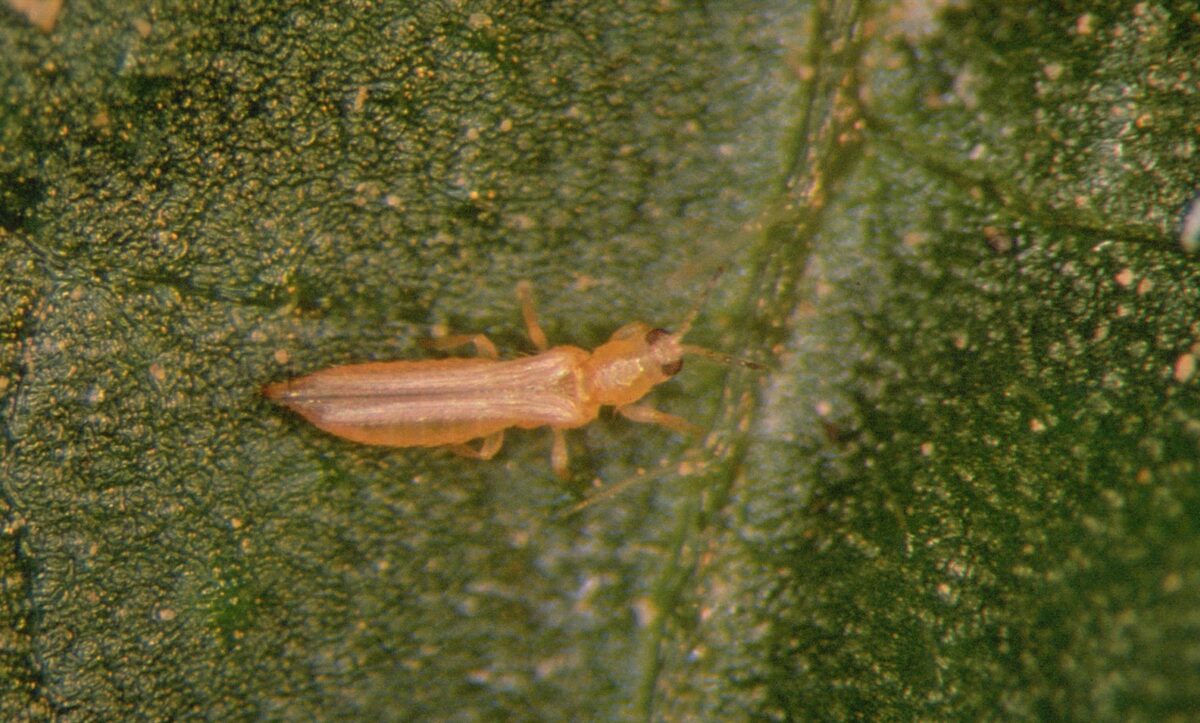
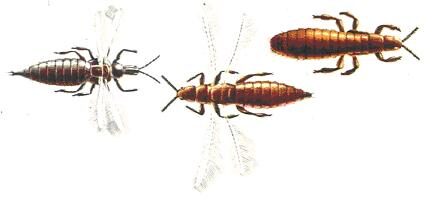
Adults are 1–1.5 mm long, slender, and yellow to dark brown, with fringed wings folded along the back. Larvae are paler and wingless. To see them, peel back a sepal of an opening bud and tap the bud sharply over white paper — you will see fast-running yellow specks. Damage shows before the insects do: brown streaks and silvery patches on petals, especially along the edges and inside folds.
What the damage looks like
Thrips rasp the petal surface and feed on the released sap. Light-colored blooms develop brown streaks and edges within a day of opening; petals deform, fail to open evenly, or shed early. A blackened rim on a white rose petal is classic thrips damage. They also vector Tomato Spotted Wilt Virus and Impatiens Necrotic Spot Virus, which can affect rose neighbors.
Life cycle
Eggs are inserted into petal tissue. Larvae feed for ~10 days, drop to soil to pupate, emerge as adults in 5 days. Generations overlap continuously in warm weather. They migrate from wild hosts (clover, dandelion, weedy areas) into the garden as those dry down — June and August are peak in zone 8.
Monitoring
Hang blue sticky cards near rose buds (thrips prefer blue to yellow); count weekly. Inspect opening buds every few days during peak flushes.
Organic & cultural treatment
Spinosad at dusk, weekly for 3 weeks during a flush. Insecticidal soap reaches them only on open blooms. Encourage minute pirate bugs (Orius) — they are voracious on thrips. Remove and destroy infested blooms (do not compost, eggs hatch later).
Chemical treatment (when warranted)
Acephate is effective but smells, persists, and is hard on beneficials. Spinetoram and abamectin are better targeted. Systemic neonicotinoids do reach blooms — avoid when pollinators are active.
Prevention
Mow weeds early — clover and dandelion are nurseries. Avoid pale-petaled hybrid teas if you cannot stay on top of thrips. Disbud heavily in heat waves to interrupt the breeding cycle. Mulch the bed deeply; soil-pupating thrips are easier to interrupt under thick mulch.