Greenhouse Whitefly
Trialeurodes vaporariorum & Bemisia tabaci
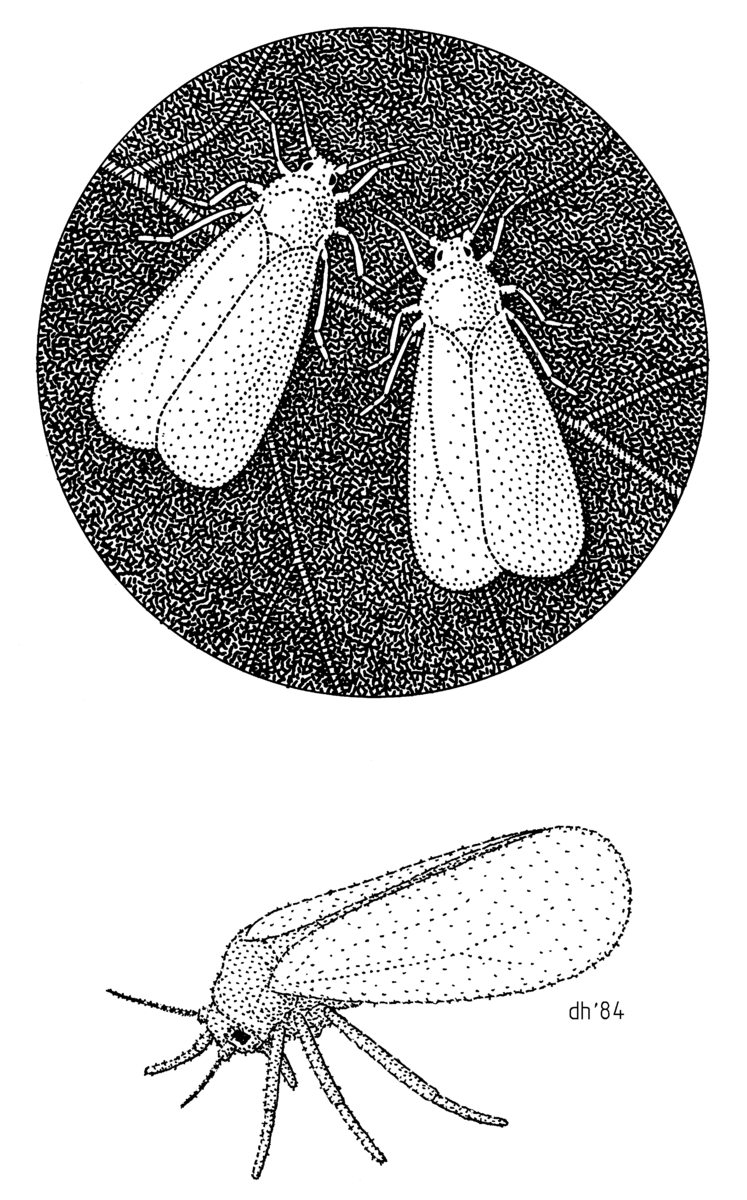
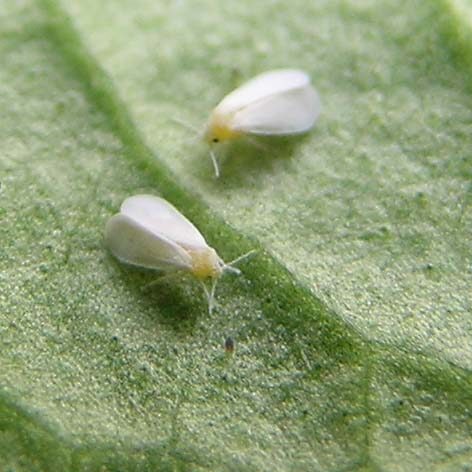
A snowstorm of tiny white moth-like insects that lifts off when you brush a leaf. More common on greenhouse-grown roses than outdoor.
How to identify it
Adults are 1.5 mm, snow white, moth-like — they fly up when disturbed in a small cloud. Nymphs (the damaging stage) are flat, oval, translucent-yellow scales fixed to the underside of leaves; later instars look like minute fish-scale patches. Honeydew and sooty mold develop. Yellow stippling on leaf upper surfaces.
What the damage looks like
Sap-sucking causes leaf yellowing, premature drop, and reduced vigor. Honeydew supports sooty mold. Whiteflies vector geminiviruses though rose-specific viruses are rare.
Life cycle
Egg → 4 nymph instars → pupa → adult, in 3–4 weeks at 75 °F. Females lay 100+ eggs over a 30-day life. Generations overlap. They overwinter on greenhouse plants and on weeds in mild climates.
Monitoring
Yellow sticky cards just above the canopy — they are strongly attracted to yellow.
Organic & cultural treatment
Insecticidal soap on the underside of leaves at 5-day intervals for 3 cycles (each cycle catches a different life stage). Encarsia formosa wasps for greenhouse populations. Strong water spray reduces adults.
Chemical treatment (when warranted)
Pyriproxyfen and spiromesifen on persistent populations. Avoid neonicotinoids on flowering plants.
Prevention
Inspect new plants. Manage weeds inside and outside greenhouses. Reflective silver mulch under bushes confuses adults.